
How to Search Maricopa County Court Records
Maricopa County keeps court files in more than one place. The right portal depends on the court that heard the case. Superior Court hears felony, big-dollar civil, divorce, probate, juvenile, tax, and mental-health matters. Justice Courts hear small civil suits, evictions, small claims, traffic, and most misdemeanors. City courts handle local code, city misdemeanors, and city traffic. Pick the level first, then the case type.
The state's main civil index opens with a basic name and case-number form. The Judicial Branch of Arizona in Maricopa County hub lists each docket, calendar, and minute entry tool used by the public. The lead-in screen also flags an audit window of up to 24 hours after a filing posts. The system goes offline Tuesday through Saturday from 3:00 AM to 4:00 AM.
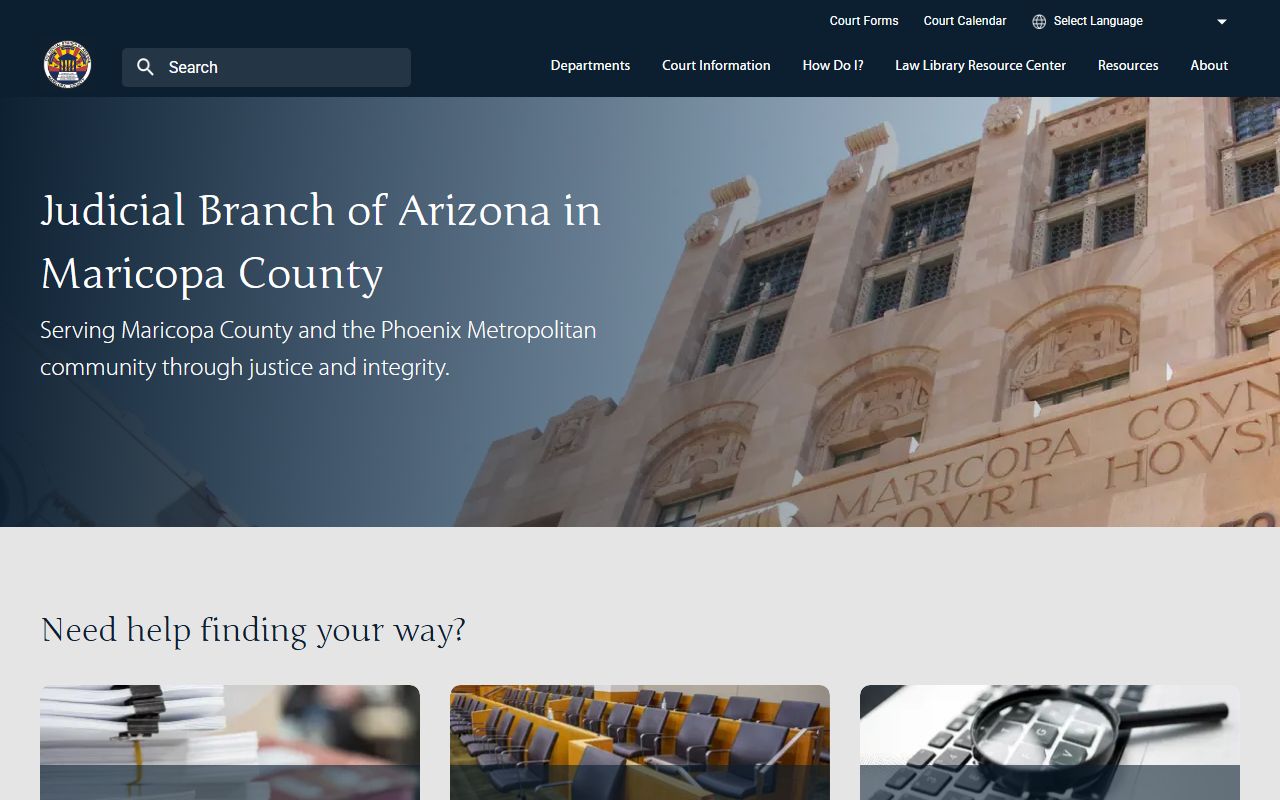
The hub links to each docket type and to the Clerk's records request menu. A user starts with the docket, then asks the Clerk for a copy if a paper file is needed.
- Open the right docket page. For civil cases use the Civil Court Case Information portal. Use the Criminal, Family, or Probate page for those case types.
- Enter a last name and first name, a business name, or a case number. Criminal also lets users search by initials plus date of birth.
- Click Search. The result list shows case number, party name, and role. Some rows say "Information is protected and will not be displayed."
- Open a case to read the docket. Each row shows filing date, code, docket date, and filing party.
- For copies, file an online records request with the Clerk of Superior Court or use eAccess for unrestricted statewide documents.
Justice Court cases live on a separate site. Use the Justice Court case search portal with name, business name, or case number. The portal warns it is not the official record. For a certified copy, contact the specific precinct that heard the case.
The Maricopa County Judicial System
Arizona's court system has three levels: trial courts, the Court of Appeals, and the Supreme Court. Trial courts are the Superior Court, the Justice Courts, and the city or municipal courts. Justice and municipal courts are limited-jurisdiction courts. The Superior Court is the court of general jurisdiction. It also acts as an appeal court for the lower trial courts. Most Superior Court appeals go to the Court of Appeals. A few matters, like death penalty appeals, go straight to the state Supreme Court.
Maricopa County is in Division One of the Court of Appeals, based in Phoenix. The county runs the largest trial-court system in the state. The Superior Court has departments for Civil, Criminal, Family, Juvenile, Probate and Mental Health, Tax, Lower Court Appeals, ADR, and specialty programs. Adult Probation and Juvenile Probation sit inside the Judicial Branch as well. The state guide says each county has one Superior Court judge plus one more judge for every 30,000 residents, which is why Maricopa County has such a large bench.
For a broader view of the state ladder, the Arizona Judiciary explanation of trial courts walks through what each level does and what cases each one hears.
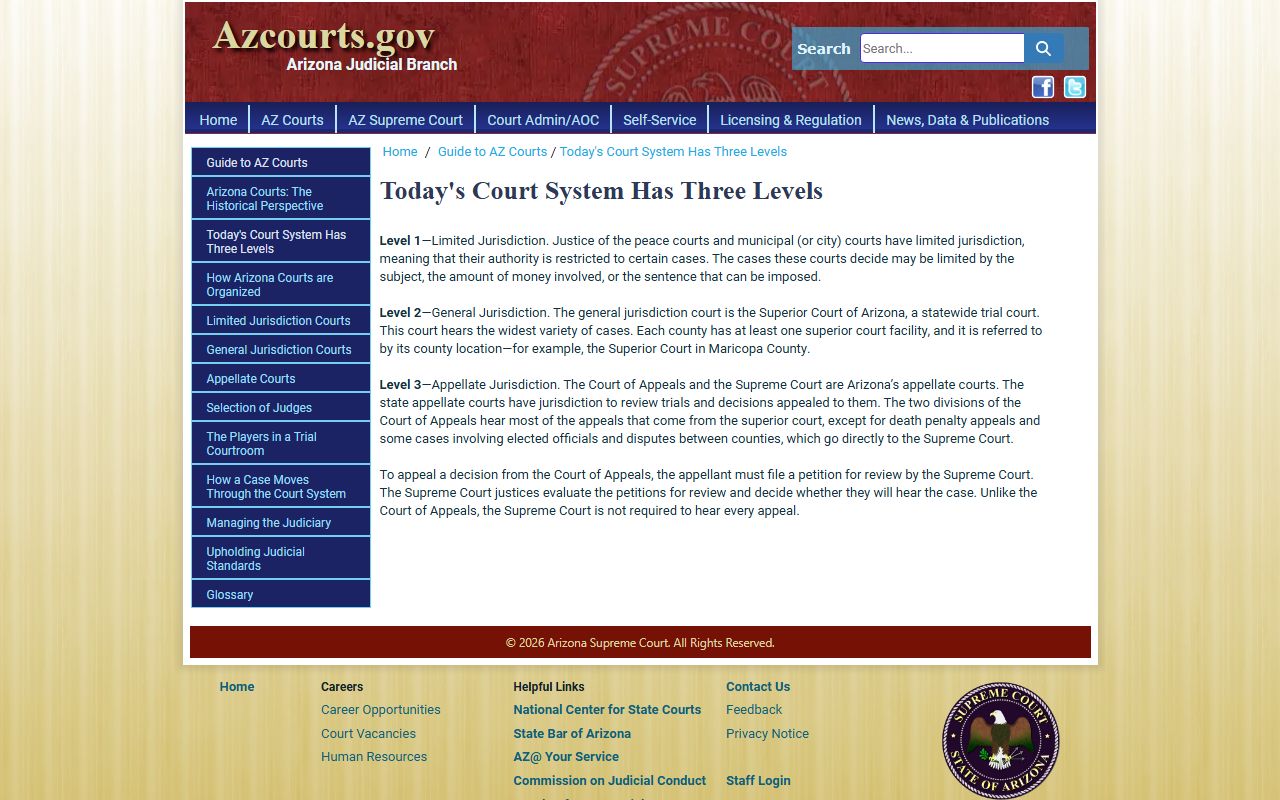
The state page confirms the split between general and limited jurisdiction and helps users pick the correct docket before searching.
Case flow: Justice Court › Superior Court › Court of Appeals (Division One) › Arizona Supreme Court
| Court | Jurisdiction | Case Types |
|---|---|---|
| Superior Court | General | Felony, civil over Justice Court limits, divorce, probate, juvenile, tax, lower-court appeals |
| Justice Court (26 precincts) | Limited | Civil up to $10,000, evictions up to $10,000, small claims up to $3,500, traffic, misdemeanors, protective orders, marijuana expungement |
| Municipal/City Court | Limited | City code, city misdemeanors, city traffic, protective orders |
| Court of Appeals (Division One) | Intermediate appellate | Most Superior Court appeals |
| Arizona Supreme Court | State high court | Death penalty appeals, discretionary review, statewide rules |
Note: Maricopa County Justice Courts plan to open a 27th precinct in the West Valley on January 1, 2027, with precinct lines shifting then.
Maricopa County Courthouses
Downtown Phoenix is a court campus, not a single building. The Central Court Building at 201 W Jefferson St holds Criminal, Family, and ADR services. East Court at 101 W Jefferson holds Civil and Probate/Mental Health. South Court Tower at 175 W Madison holds Criminal and Jury Service. The Old Courthouse at 125 W Washington holds Public Information and added Probate/Mental Health space. The Clerk's Customer Service Center sits at 601 W Jackson. The Downtown Justice Center is at 620 W Jackson. The public entrance for the Central Court Building is on the north side.
For a quick view of the main building and its hours, the Central Court Building page shows the address, the public hours, and a campus map.
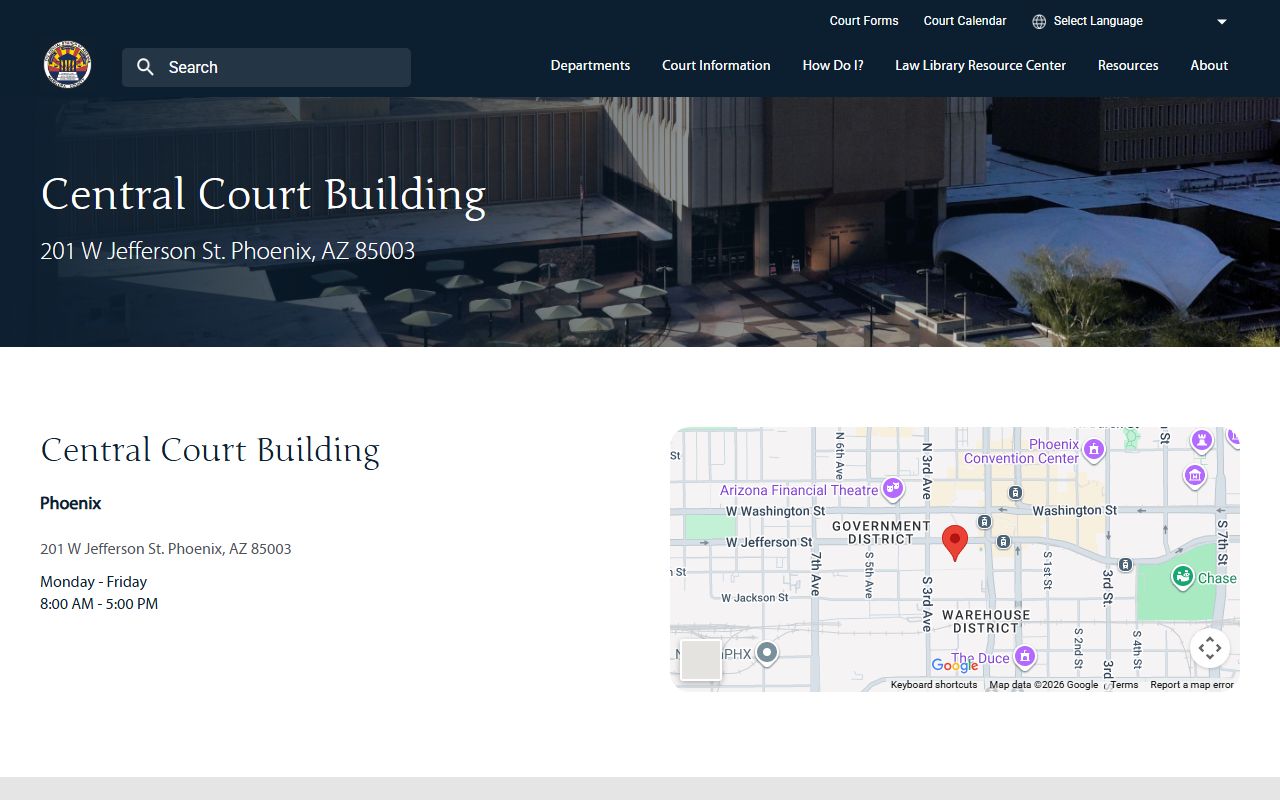
The page also notes inside paths: an escalator to South Court Tower and a plaza-level walkway to East and West Court. A Mother's Room sits on the sixth floor, Office H, on the south side of Chambers Hallway.
A full list of court sites, including the regional centers in Mesa, Surprise, and north Phoenix, is on the Superior Court location index page.
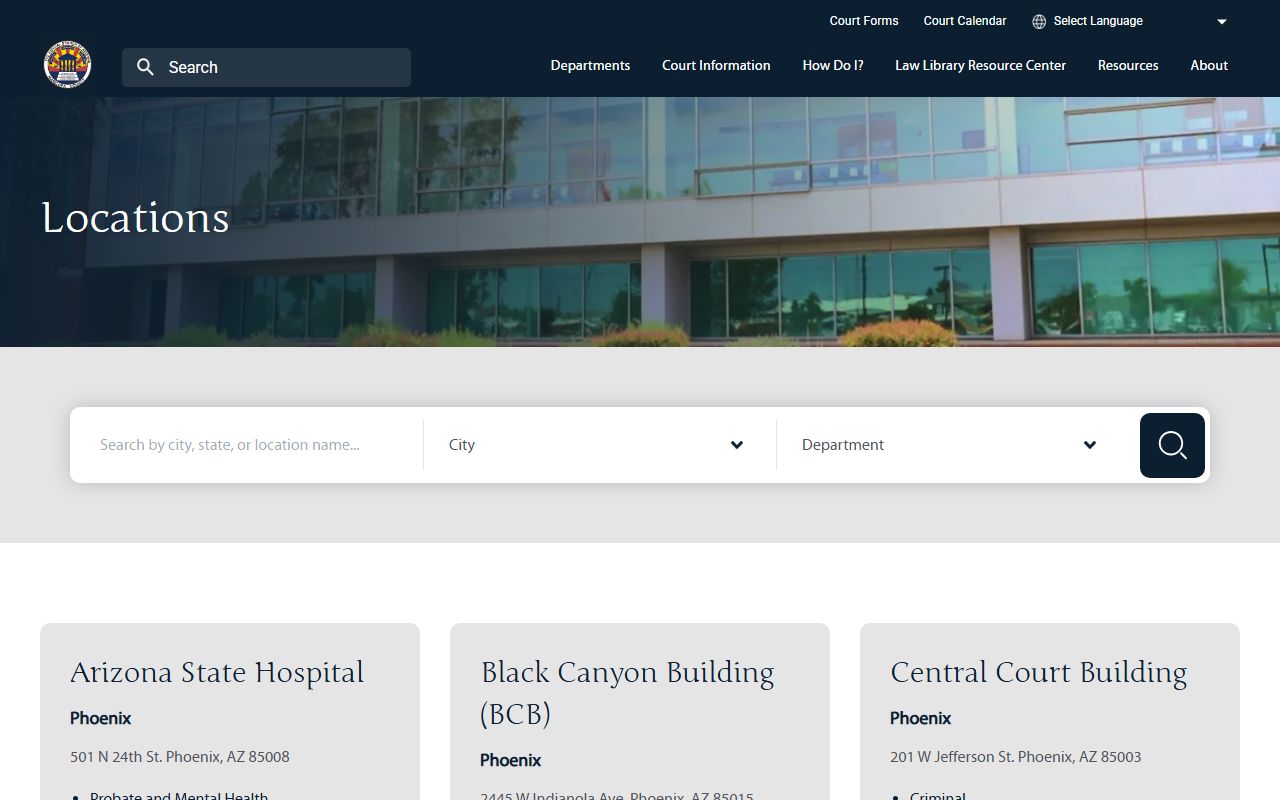
The list helps users pick the right address for a hearing, a filing drop, or a copy pickup.
Types of Court Records in Maricopa County
Maricopa County court files cover a wide range of cases. The Clerk of the Superior Court keeps the official record for general-jurisdiction cases. Each Justice Court keeps its own files. City courts keep their own as well. Most case dockets are open to the public, but the body of each file can have sealed or redacted parts.
The Civil Department lists contract disputes, personal injury claims, property damage, and medical malpractice as common case types. The Criminal Department hears felony charges from initial appearance through sentencing. Family Court handles divorce, parenting time, support, and protective orders linked to family cases. Probate handles wills, estates, guardianships, and conservatorships. Mental health work shares space with probate.
- Civil records - Contract claims, injury, property damage, and malpractice cases filed in Superior Court; small civil filed in Justice Court.
- Criminal records - Felony files in Superior Court; misdemeanors and traffic in Justice or city courts.
- Family records - Divorce, paternity, custody, child support, and spousal maintenance files.
- Probate records - Estates, wills, personal representatives, guardianships, and conservatorships.
- Traffic and misdemeanor records - Citations, fines, and short jail terms heard in Justice and city courts.
- Juvenile records - Delinquency, dependency, and adoption files with strong access limits.
- Mental health records - Court-ordered evaluation and treatment files held in confidence by statute.
What Maricopa County Court Records Show
A public docket page in Superior Court shows the key facts about the case. The civil sample inspected for case CV1991-028550 listed the case number, the judge, the file date, the court location, and the case type. Party rows showed party name, role, sex, and the attorney or "Pro Per" for a self-represented party. Document rows listed filing date, code, docket date, and filing party. Some rows also showed a short note such as "Order on Supplemental Proceedings" or "Granting Default."
| Field | What It Shows |
|---|---|
| Case Number | Court ID such as CV2024-001234; the prefix marks the case type. |
| Judge / Judicial Officer | Assigned judge or commissioner; civil FAQ says it appears under "JO." |
| File Date | The date the initial filing was accepted by the Clerk. |
| Location | Court site, often "Downtown" for the main Phoenix campus. |
| Case Type | Civil, criminal, family, probate, tax, or mental health. |
| Parties | Names and roles such as Plaintiff, Defendant, Petitioner, Respondent. |
| Disposition | The case outcome from the latest minute entry or judgment. |
| Docket Entries | Date-stamped list of filings, orders, minute entries, and hearings. |
The portal does not always show document images. Use the Clerk's records request, ECR Online for parties, or eAccess for unrestricted statewide documents to get an actual copy. Some result rows can show "Information is protected and will not be displayed" for sealed or confidential parties.
Civil Court Case Search Fields
The Superior Court civil docket form has three search modes: by party name, by business name, and by case number. The name search asks for last name and first name. The business search uses a separate business-name box. The case-number search opens straight into the case-history page when a match is found.
| Field | Type | Required | Notes |
|---|---|---|---|
| Last Name | text | For name search | Used with first name; case-insensitive. |
| First Name | text | For name search | Pairs with last name to narrow hits. |
| Business Name | text | For business search | Separate "Search by Business Name" area. |
| Case Number | text | For case-number search | Use the exact format, e.g., CV1991-028550. |
| Search | button | n/a | Each mode has its own Search button. |
Criminal search adds a second path: initials plus date of birth. That helps when a name is common or a party uses a variant spelling. The Criminal Department Information line is 602-506-8575 for help with a search.
Public Access Laws for Maricopa County Court Records
Arizona public access comes from two layers. The general Public Records Law in Title 39 sets the rule for most government files. Arizona Supreme Court Rule 123 sets the rule for judicial records. Rule 123 presumes public access but lists closed and confidential records, redaction steps, and bulk-data limits. Court records are not pulled by sending a generic open-records letter to a county office. The request must go to the court that keeps the file.
The state's core open-records section, A.R.S. § 39-121, lays out the basic right of inspection during office hours.
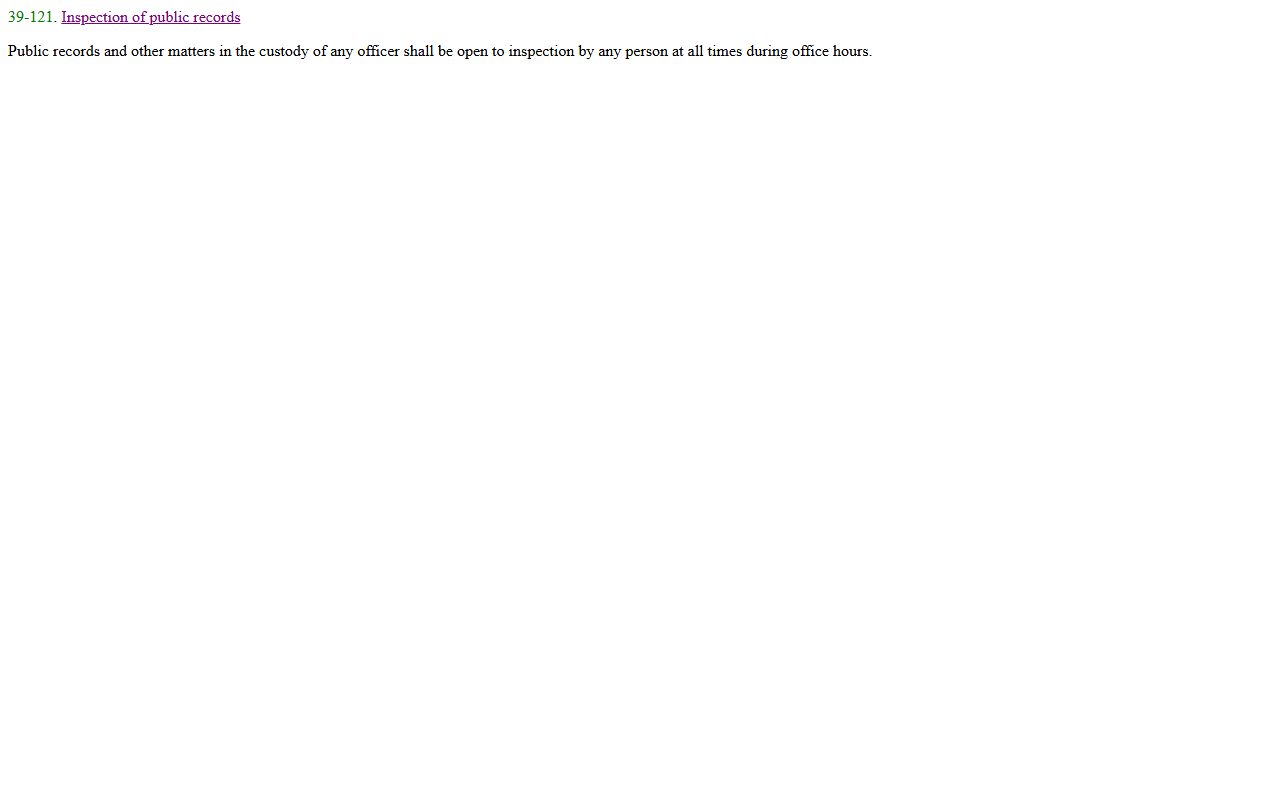
The statute is short and direct. It is the start point for any public-records dispute in Arizona.
Key Statutes:
A.R.S. § 39-121 - Public records held by an officer are open to inspection during office hours.
A.R.S. § 39-121.01 - Sets duties on public bodies to keep records and answer copy and mail requests.
A.R.S. § 39-121.02 - Gives a court action path when access is wrongly denied.
A.R.S. § 13-911 - Lets eligible people petition to seal arrest, conviction, and sentencing records.
A.R.S. § 8-208 - Opens some juvenile delinquency files to the public while shielding adoption, severance, and dependency.
Title 39 also has commercial-purpose rules in § 39-121.03 and witness/victim limits in § 39-121.04. Court fees come from A.R.S. §§ 12-284, 12-304, 22-281, Rule 123, and local fee schedules.
Records That Are Restricted or Confidential
Not every file in a Maricopa County court is open. Some are sealed by statute. Some are sealed by court order. Some are kept private to protect a child, a victim, or a patient. The list of closed categories is set by Arizona law, by Rule 123, and by specific case orders.
Adoption files are sealed under A.R.S. § 8-120. Juvenile dependency and severance files are not open under § 8-208. Mental-health treatment records are confidential under A.R.S. § 36-509. Sealed criminal records under A.R.S. § 13-911 are pulled from public view but may still be used by courts, prosecutors, law enforcement, and the person involved. Marijuana expungement under A.R.S. § 36-2862 vacates the conviction and seals the file for almost all uses.
Grand jury work is generally closed. Personal data such as Social Security numbers, account numbers, child names, addresses, and medical notes are routinely redacted. To view a sealed file, a person normally needs a court order or proof of a statutory right of access. A motion is filed in the court that holds the case.
Specialty Courts in Maricopa County
Maricopa County Superior Court runs several specialty tracks. These programs aim to match a case with the right service, not just the right charge. The Specialized Courts page lists the main programs and the courts that route cases into them.
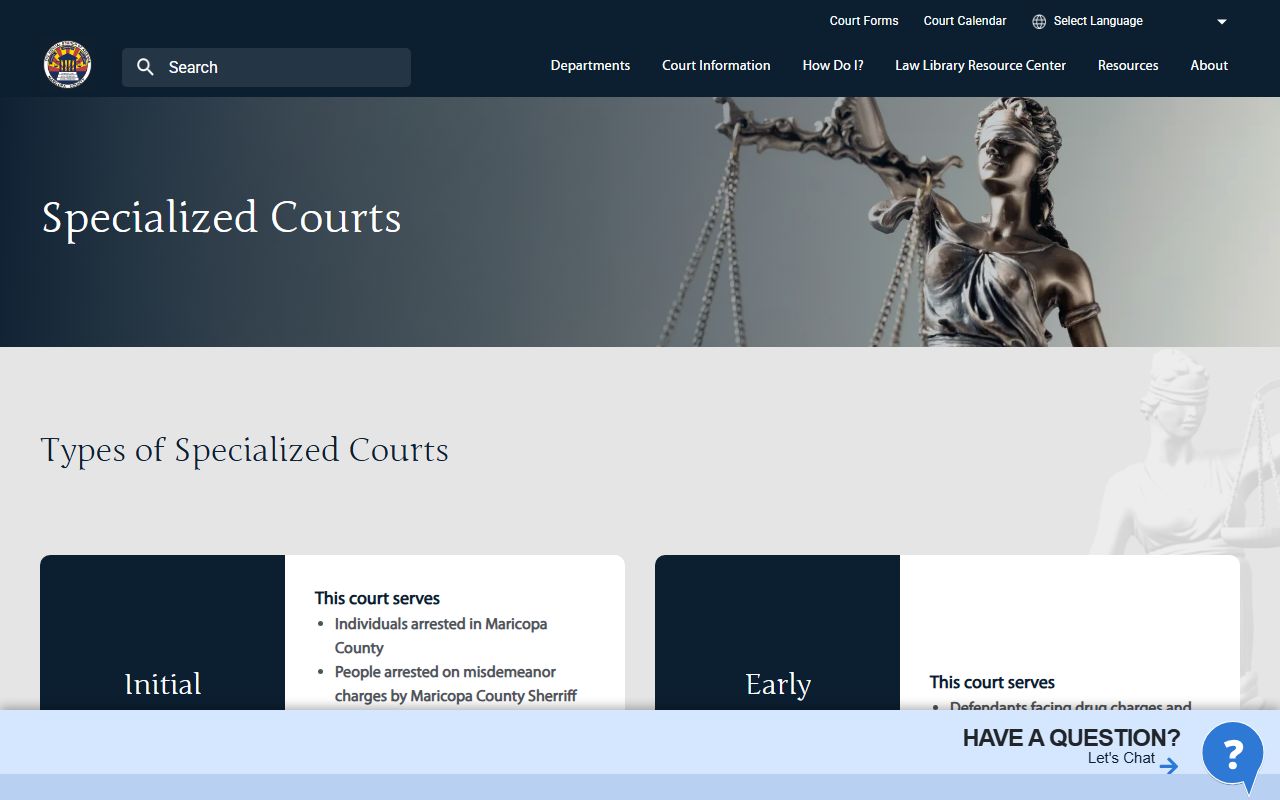
The page is the start point for users searching for a veteran, mental health, or drug-related case path.
Initial Appearance Court is the first stop after most arrests. It sets release conditions, checks probable cause, and routes the case. Early Disposition Court helps eligible drug and lower-felony cases reach a fast plea, treatment, or supervision plan. Veterans Court connects eligible veterans to treatment and oversight tied to military-service issues. Criminal Mental Health Court hears cases where mental health needs change how the case is handled. Regional Homeless Court handles cases tied to homelessness and links them to provider services.
Entry to each program depends on charge, history, and screening. A defense lawyer or the court's specialty unit confirms eligibility. The court calendar for any given day shows where these cases sit on the schedule.
For a live view of court activity, see the Today's Court Calendar portal.
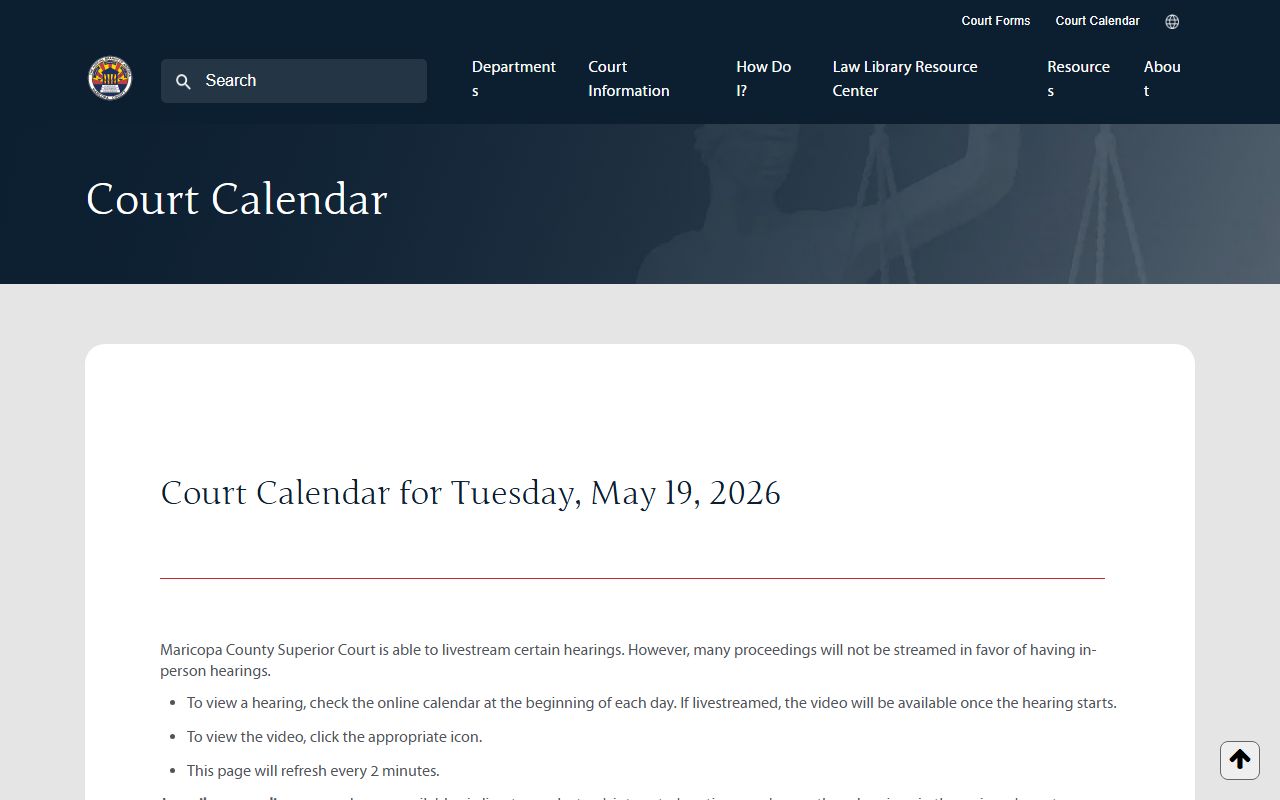
The calendar lists hearings by court, judge, and case type. It is useful for checking whether a hearing was held or moved.
Maricopa County Sheriff and Jail
The Maricopa County Sheriff's Office runs the county jail system. The MCSO public-safety report calls MCSO the fourth largest sheriff's office in the nation. As of 2024 the office actively managed five jail facilities plus an Intake, Transfer and Release (ITR) site. A 512-bed facility built in 2020 is not yet fully operational and is used for intake overflow. The current sheriff is Sheriff Jerry Sheridan. The MCSO main address is 550 West Jackson, Phoenix, AZ 85003, and the main phone is 602-876-1000.
The official Maricopa County Sheriff's Office site hosts the inmate search tool, the warrant lookup, news, and program info.
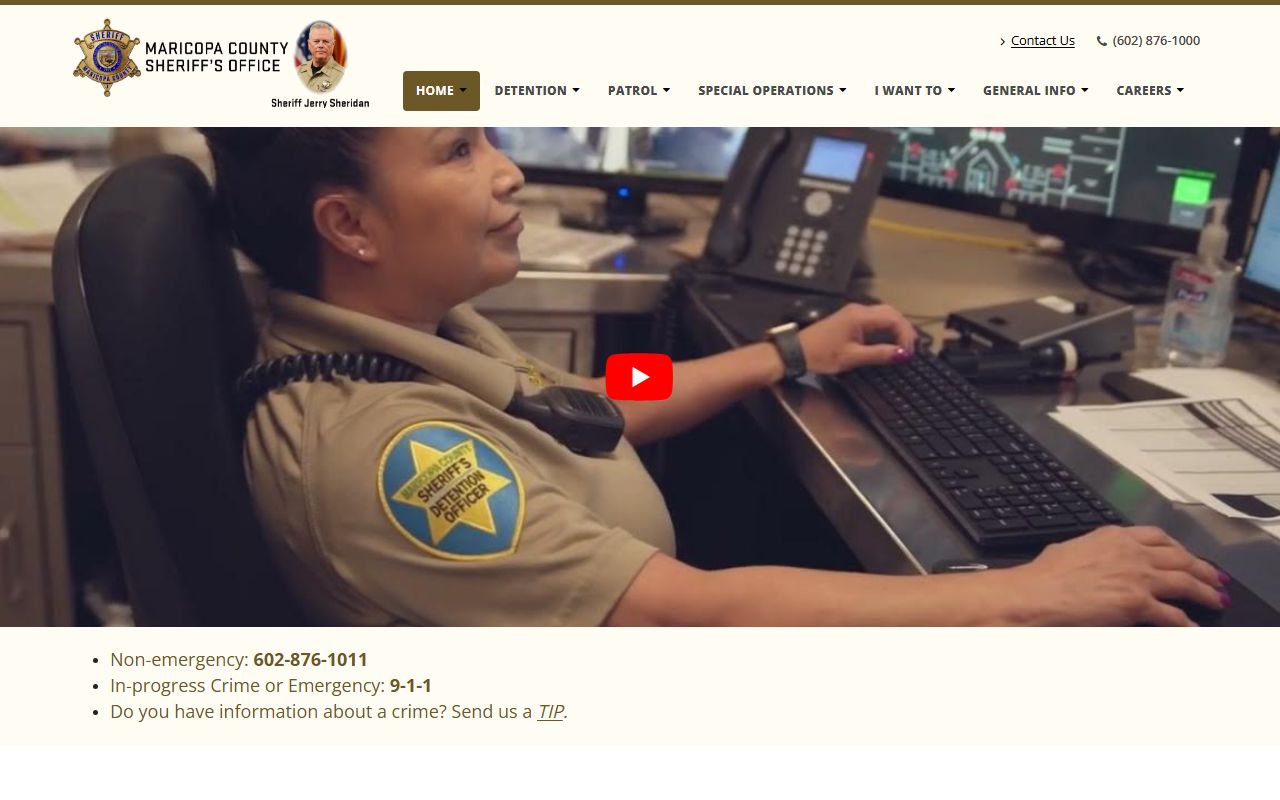
The home page links to the inmate search, jail info, and contact lines for each facility.
All arrestees enter the jail through ITR. The flow is arrest or remand, search, health screening, mugshot, fingerprints, and initial appearance. The court then either releases the person or remands them for housing. Lower Buckeye Jail is the largest detention facility in Arizona at 670,237 square feet, built in 2005. Estrella Jail, built in 1991, is the women's facility with five tower units and ten dorms.
For the public roster, use the MCSO inmate tool. For active warrants, use the MCSO warrant lookup. See Maricopa County inmate records for the full roster fields and warrant records for active warrants. The released inmates page covers how to confirm a recent release.
Marriage, Divorce, and Probate Records
The Clerk of the Superior Court issues marriage licenses and keeps divorce decrees and probate files for Maricopa County. The license fee is $98.00. The license is issued the same day the couple applies in person. It is good for one year. The officiant must return the signed license within 30 days of the ceremony. Divorce records are Family Court matters, and the search uses the Superior Court Family Court Case Information portal.
Probate covers wills, estates, guardianships, and conservatorships. Search by name or case number on the Probate Court Case Information portal. Small estates may use an affidavit under A.R.S. § 14-3971 instead of a full probate. For copies, request the file from the Clerk. The Probate Lawyers Assistance Program (PLAP) gives short Wednesday phone consults at 602-732-2834. See the marriage and divorce records and probate records pages for the full walk-through.
- Testator
- A person who makes a will.
- Executor / Personal Representative
- The person named to settle an estate under court oversight.
- Intestate
- Dying without a valid will; state law sets who inherits.
- Guardianship
- Court-set authority over a person who cannot make safe choices.
- Conservatorship
- Court-set authority over the money or property of a protected person.
Clerk of Court Records Fees
The Clerk of Superior Court publishes a clear fee list for copies and certifications. In-person payment uses money order, debit, credit, or cash. Personal checks are not taken. Online marriage payments take Visa, MasterCard, and American Express. Some users may qualify for a fee deferral or waiver through the Clerk's "Apply for a Fee Deferral or Waiver" menu.
| Item | Amount |
|---|---|
| Plain copy per page | $0.50 |
| One-document certification | $35.00 |
| Exemplification per certification | $70.00 |
| Authentication per certification | $105.00 |
| E-certified court document | $35.00 |
| Electronic reproduction CD per case | $35.00 |
| Research per year/source searched | $35.00 |
| Marriage license | $98.00 |
| Certified copy of marriage license | $35.00 plus $0.50 per page |
Justice Court certified-copy fees are set by each precinct. Ask the precinct that heard the case before mailing a check. The public records page covers fee deferral rules in more depth.
How to Read Maricopa County Court Records
Court files use a short list of codes. Once a user knows the codes, the docket reads quickly. ORD is an order. AAS is an affidavit of attempted service. APL is an application. ARJ is an affidavit of renewal of judgment. AFF is an affidavit. ME means minute entry, which is the court's record of a hearing or ruling. NOH is a notice of hearing. LET is a letter. MEJ is a motion or affidavit for entry of default or judgment. A "Pro Per" tag in the party section means the party speaks for themselves with no lawyer.
Charges and convictions are not the same. A charge means a person was accused. A conviction means the court found, or the person pled, guilty. A dismissal with prejudice ends the case for good. A dismissal without prejudice may let the case start again. A "Set Aside" under A.R.S. § 13-905 lifts many penalties but does not erase the record. A "Sealing" under A.R.S. § 13-911 hides the record from most public uses. A "Marijuana Expungement" under A.R.S. § 36-2862 vacates the conviction and seals the file.
Filing date and docket date can differ. Filing date is when the document came in. Docket date is when the Clerk recorded the entry. Most users want filing date for proof of timing. Use the calendar tool for hearing dates, not the docket alone.
Accuracy and Record Limits
Online dockets are useful but not final. The Superior Court civil docket index says auditing can occur up to 24 hours after a filing posts. The Justice Court portal says the website is not the official record and tells users to contact the court for the official file. MCSO inmate data carries a clear warning that the data may not be current, accurate, or complete and that true identity needs a fingerprint match.
For a legal need, get a certified copy from the Clerk or the precinct that holds the case. The file-stamped paper is the proof. A docket print is not enough for most court filings, real-estate sales, or job background checks. The court is not liable for damage from use of the online tool, per the standard disclaimer.
Note: Confirm any date, party, or charge with the Clerk or the precinct before relying on a docket print for a legal step.
History of Maricopa County Courts
Maricopa County was created in 1871. Phoenix became the county seat. Arizona reached statehood in 1912, and the Superior Court system grew with state population. The downtown court campus shows the layers of growth. The Old Courthouse at 125 W Washington holds older functions. The Central Court Building at 201 W Jefferson is the main public face. The East Court, West Court, and South Court Tower add modern departments. Regional centers in Mesa, Surprise, Avondale, and north Phoenix cut travel for suburban users.
Online tools came in waves. The Clerk's ECR Online lets a party read documents for their own case. The state's eAccess portal opens unrestricted public records for a fee. The online marriage license program lets eligible Arizona residents apply by ID upload, affidavit upload, and phone verification. The 2024 Jail Master Plan Refresh outlines a 15-year, $1.6 to $2.0 billion update to the jail system, with two main campuses and a projected 3,661-bed shortage by 2039. A long-running jail conditions case, Hart v. Hill / Graves v. Penzone, ended in 2019 but still shapes population goals.
Courthouse Contact
The Central Court Building is the main reference point for the Maricopa County Superior Court. Public hours are Monday through Friday, 8:00 AM to 5:00 PM. The Judicial Branch Information Center line is 602-506-3204. The Clerk's Customer Service Center handles records requests and marriage licenses at 601 W Jackson Street, with the main Clerk line at 602-372-5375 or 602-37-CLERK.
Where do I park for the Central Court Building?
Official Superior Court parking info names CityScape, Luhrs City Center, and the City of Phoenix Parking Garage at 300 W Jefferson St as paid options without validation. Metered street parking is close by, and free public parking is listed between 5th and 6th Avenues. The Criminal Department FAQ says the court does not validate downtown parking and suggests extra travel time.
What can I bring into the courthouse?
Expect security screening. Visitors empty pockets, place bags on the X-ray, remove belts, and walk through a metal detector. Firearms, knives, pepper spray, tools, flammable items, cannabis, and recording gear are not allowed without approval. Recording in a courthouse needs approval under Arizona Supreme Court Rules 122 and 122.1.
Self-Help and Legal Aid
Maricopa County users have several free or low-cost help paths. The Law Library Resource Center is linked from each Superior Court department page and holds forms for Civil Complaint, Name Change, Birth Certificate or Marriage License, Garnishment, and more. The statewide Arizona Courts Self-Service Center hosts forms and step-by-step instructions for many case types.
Probate users can call the Probate Lawyers Assistance Program at 602-732-2834. PLAP gives up to 30 minutes by phone on Wednesdays from 9 AM to noon. It is free for eligible low-income people. A $40 cash fee applies for others. PLAP gives advice and form review but does not prepare full documents. Maricopa County Public Defense Services coordinates five indigent-defense offices for court-appointed criminal cases. The State Bar of Arizona lawyer referral service helps with private attorney searches. MCAO Victim Services supports crime victims through the Victim Compensation Program.
The court's ADA page and the Interpretation and Translation Services page cover access needs. Service animals are allowed after screening under A.R.S. § 11-1024.
Frequently Asked Questions
Where do I search Maricopa County Superior Court records?
Use the Superior Court docket portals. Civil, Family, and Probate searches use last name and first name, or a case number. Criminal search adds initials plus date of birth. The public docket shows case history and entries but does not always include documents. For certified copies, use the Clerk's records request, eAccess for unrestricted statewide files, or ECR Online if you are a party to the case.
Are online docket results the official court record?
No. Superior Court and Justice Court both warn users not to rely on web data for legal action. The Justice Court portal states plainly that it is not the official record. For legal use, get a certified copy from the Clerk or the precinct that holds the case. The file-stamped paper is the proof source.
What is the difference between Superior Court and Justice Court?
Superior Court is the general-jurisdiction court. It hears felony cases, big-dollar civil, divorce, probate, juvenile, tax, and appeals from lower trial courts. Justice Courts are limited-jurisdiction precinct courts. They hear civil suits up to $10,000, evictions up to $10,000, small claims up to $3,500, traffic, misdemeanors, protective orders, and marijuana expungements.
How do I get a certified copy of a Maricopa County court record?
For Superior Court files, ask the Clerk of Superior Court. The Clerk's online records request handles certified copies and complex requests. Fees are $0.50 per page and $35.00 for certification. For Justice Court files, mail or visit the precinct that heard the case. City court files come from the city court that holds them.
Can I search criminal cases by date of birth?
Yes. The Superior Court Criminal Case Information page has a search by initials plus date of birth. It asks for the last name initial, first name initial, and DOB. It also accepts a full last and first name search or a case number. The DOB field is a date input.
How often is Superior Court docket information updated?
The civil docket index says auditing can occur up to 24 hours after information posts, so some entries may shift. The system also goes offline Tuesday through Saturday from 3:00 AM to 4:00 AM. New filings may not show right away. Wait a day before assuming a filing was missed.
Where do I search for inmates in the Maricopa County jail?
Use MCSO Inmate Information. Search by booking number, or by last name, first name, and date of birth in YYYYMMDD format. MCSO notes that data may not be current and that true identity needs a fingerprint match. See the inmate records page for more.
Can Arizona criminal records be sealed?
Eligible people may petition to seal arrest, conviction, and sentencing records under A.R.S. § 13-911. Waiting periods run from sentence completion: 10 years for class 2/3 felonies, 5 years for class 4/5/6 felonies, 3 years for class 1 misdemeanors, and 2 years for class 2/3 misdemeanors. Marijuana expungement under A.R.S. § 36-2862 is separate.
More questions and answers are on the Maricopa County Court Records FAQ page.